Daily Routine Chart for Kids

How We Made a Daily Routine Chart for Kids That Aryan Actually Follows

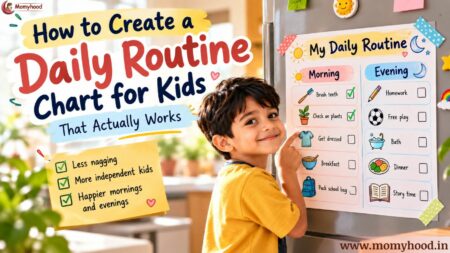
For almost a year, my mornings sounded like a broken record. “Brush your teeth.” “Where’s your uniform.” “Five more minutes, then breakfast.” I was saying the same ten instructions every single day, and Aryan was tuning out every single one. What finally broke that cycle wasn’t stricter rules — it was a simple daily routine …
how to bond with your child

How to Bond With Your Child When They’d Rather Be Outside Playing

A few months ago, I realized I’d started every conversation with Aryan the same way: “Homework done?” “Did you have your bath?” “Is your bag packed for tomorrow?” Logistics. Just logistics. He’d answer in one word and run back outside to his friends, and I’d stand there wondering when exactly we’d stopped actually talking. That’s …

Toddler to Eat More Vegetables

Encouraging Your Toddler to Eat More Vegetables: A Mom’s Guide

Quick answer: Offer vegetables often without pressure – toddlers may need 10–15 tries before accepting a new food. Involve them in cooking, eat veggies yourself, and pair new foods with familiar favourites. Key takeaways Exposure beats pressure Let toddlers cook and serve Pair new with familiar Model eating vegetables yourself Hello dear parents! Being a …

Explaining Periods to Young Children

Explaining Periods to Young Children: How I Talked to My 6-Year-Old Son About Menstruation

Quick answer: Start early with simple, honest words and correct names. Periods can begin as early as 8, so talk before then, keep it matter-of-fact, and include boys in the conversation. Key takeaways Use correct, simple words Talk early – periods can start around 8 Include boys too Prepare a small period kit together Today …

Working From Home with Toddlers

This Is How I Manage My Toddler While Working From Home!

Quick answer: Plan deep work for naps and early mornings, use “busy boxes” and independent play, share shifts with your partner, and be honest with your team about your schedule. Key takeaways Schedule focus work around naps Rotate a few busy boxes Split the day with your partner Lower expectations on hard days Although I …

things to buy for babies

Things to Buy for Babies || Newborn’s Checklist || Must-Have Essentials

Quick answer: Buy a safe sleep space, a car seat if you travel by car, nappies, a few cotton outfits, swaddles, feeding basics and a baby thermometer. Skip baby walkers and most gadgets. Key takeaways Safety items first: sleep space and car seat Buy small sizes in small quantities Skip baby walkers Borrow big items …

manage anger effectively

5 Things Parents Can Do to Manage Anger Effectively in Kids – Tips By A Mom Herself!

Quick answer: Teach kids to name anger, give them calm-down tools (breathing, a cosy corner, movement), stay calm yourself and solve the problem together afterwards. Get help if outbursts are frequent, violent or getting worse. Key takeaways Anger is OK, hurting is not Teach calm-down skills when the child is calm Model the behaviour you …

Positive Parenting

Embracing Positive Parenting: My Journey with My 4-Year-Old Son, Hitarth

Quick answer: Positive parenting means warm connection plus clear, consistent limits – praising effort, explaining rules, and guiding instead of punishing. It is not permissive parenting. Key takeaways Connection first, correction second Praise specific effort, not just results Limits are part of positive parenting Your calm is your strongest tool As I embarked on my …

creative discipline methods

Creative Discipline Methods – How I Creatively Discipline My 4-Year-Old Son, Hitarth

Quick answer: Creative discipline teaches instead of punishing: use play, choices, natural consequences and connection to guide behaviour. Research and the AAP advise against spanking and harsh shouting. Key takeaways Discipline means teaching, not hurting Play and humour defuse many power struggles Offer two acceptable choices Use natural and logical consequences Disciplining a child can …

Strategies for Making School Enjoyable

Your Child Doesn’t Want to Go to School? Try This…

Quick answer: Prepare early (visit the school, practise the routine), keep goodbyes short and confident, talk about feelings, and partner with the teacher. Most children settle in 2–6 weeks; persistent refusal needs a closer look. Key takeaways Familiarity reduces fear – visit, walk the route, meet the teacher Short, warm goodbyes work better than long …