
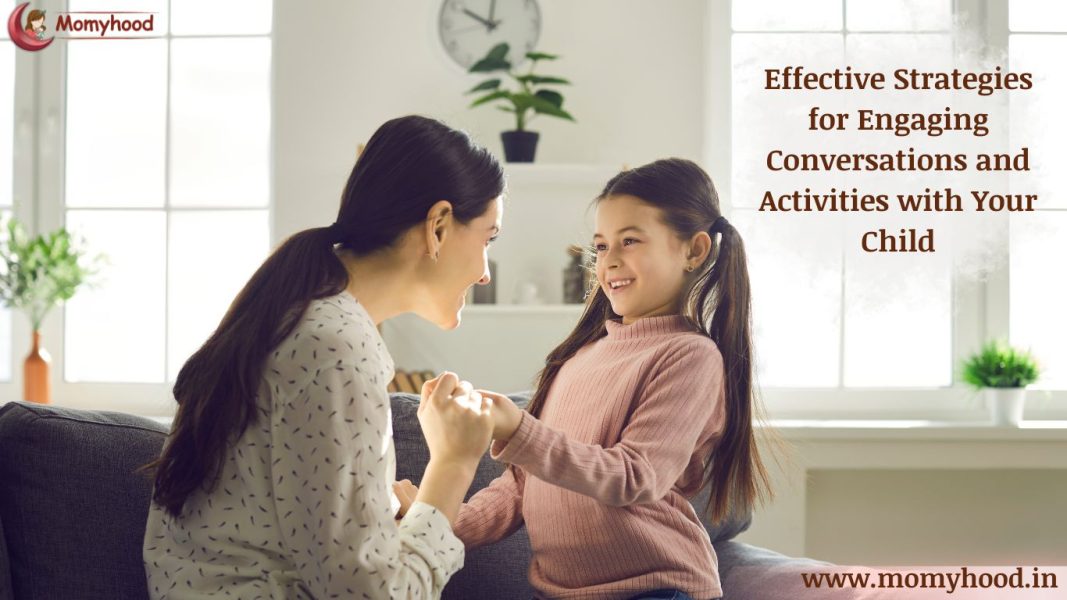
A few months ago, I realized I’d started every conversation with Aryan the same way: “Homework done?” “Did you have your bath?” “Is your bag packed for tomorrow?” Logistics. Just logistics. He’d answer in one word and run back outside to his friends, and I’d stand there wondering when exactly we’d stopped actually talking. That’s when I started really thinking about how to bond with your child once they’re old enough to have a life outside the house — because the old ways of connecting, the ones that worked when he was small and clingy, just don’t work anymore.
Key Takeaways
- Generic questions like “how was your day” rarely open up a child who craves independence — specific, story-based questions work far better.
- Sharing your own childhood memories first makes kids more willing to open up about theirs.
- Side-by-side activities — cooking, gardening, car rides — get more honest conversation out of kids than sit-down talks do.
- A fixed daily window for connection, even just a few minutes, matters more than occasional big outings.
- Letting your child help plan activities turns them from a chore into something they look forward to.
- Reflecting together after an activity is what actually deepens the bond, not the activity itself.
If you’re a parent of a nine, ten, eleven-year-old right now, you probably know this stage. They want independence. They want their friends, their outdoor time, their own little world you’re not fully part of anymore. And that’s healthy — I remind myself of that constantly. But healthy independence doesn’t mean you stop trying to connect. It just means you have to get a little more thoughtful about how.
How to Bond With Your Child Through Everyday Conversations
The biggest shift for me was giving up on generic questions. “How was your day?” gets you “fine.” I know this because I asked it for two years and got “fine” every single time. What actually opened Aryan up was asking about the specific thing he’d been doing, not the day as a whole.
That’s when I understood — kids don’t want to report on their day like it’s a meeting. They want to tell a story, if you ask about the story instead of the summary.
I also started sharing pieces of my own childhood, especially the parts that surprised him. He didn’t know I used to build “dens” out of bedsheets in my grandmother’s house, or that I was scared of the dark until I was almost twelve. Telling him this did something I didn’t expect — it made him more willing to tell me his own fears and stories, because I’d gone first.
This kind of daily check-in is also one of the simplest ways to raise emotionally intelligent children — naming a feeling out loud, even a small one, teaches kids to recognize it in themselves. And honestly, the biggest change wasn’t a technique at all. It was simply deciding on a fixed time — for us, it’s right after dinner, before screen time starts — where we sit and each share one thing that made us happy that day. Some days his answer is one sentence. Some days it turns into a twenty-minute story about a cricket match gone wrong. Either way, he knows the window exists, and more often than not, he uses it.
Also read: Mental Health Activities To Do With Children – Strengthen Child’s Mind
📣 Loved what you read? Want to go deeper into conscious parenting? ✨ The Power of Manifestation in Parenting is now available — A soulful guide packed with real-life tools like affirmations, energy shifts, and sleep talk that I personally use with my son, Hitarth. 💛 Start your journey toward calmer, connected parenting today. 🎉 Launch Offer: Only ₹99 (limited-time price!) 📲 Instant download. No waiting. 👉 Grab your copy now!.
How to Bond With Your Child Through Everyday Activities
I used to think bonding needed a “planned activity” — a board game night, a craft project, something on the calendar. And those help. But some of the best conversations I’ve had with Aryan happened while doing something completely unplanned, like kneading dough or folding laundry together.
There’s something about doing a task side by side, instead of face to face, that makes kids talk more freely. I’ve noticed this in the car too — some of Aryan’s most honest moments have come from the back seat, looking out the window, not at me.
We also started a small family ritual that Aryan actually asks for now: a weekly activity chart that he helps design himself. Nothing elaborate — just a colored chart on the fridge with a mix of outdoor play, one family activity, and some quiet time blocked in. Letting him choose what goes on it made a huge difference. It stopped feeling like a schedule imposed on him and started feeling like something we built together.
One thing that surprised me was how much a “themed night” excited him more than I expected for a ten-year-old. We did a simple Science Night — baking soda volcano, growing sugar crystals, nothing Pinterest-worthy — and he still brings it up a month later. Not because the experiments were impressive, but because it was something just the two of us built and laughed through, without any screens involved.
Gardening turned out to be another quiet win. We picked out marigold and tomato seeds together one Sunday, and now checking on them has become this small daily ritual — two minutes, tops, but two minutes where he’s telling me what changed since yesterday. It’s not a big activity. It’s just a consistent one, and I’ve learned that consistency matters more than scale.
Why Does Reflecting Together Matter More Than the Activity Itself?
The step I almost always skipped in the beginning was talking about the activity after it was over. I’d plan something, we’d do it, and then move straight on to the next thing on the to-do list. But I’ve started asking Aryan simple questions once something’s done — what he liked, what he’d change, whether he’d want to do it again.
That reflection piece is, I think, the real answer to how to bond with your child in any lasting way — not the activity, not the perfect conversation starter, but going back afterward and asking what it meant to them. It turns a one-off outing into something that shapes how you plan the next one.
What Would I Tell Any Parent Standing Where I Was?
This stage doesn’t last — the same closeness matters even more once you’re bonding with a teenager instead of a ten-year-old. Your child wanting independence isn’t a sign you’re losing them. I had to remind myself of that on the days Aryan chose his friends over me without a second thought. Outdoor play, his own friendships, his own little world — all of that is exactly what’s supposed to happen at this age. The goal was never to compete with it. It was to build small, consistent bridges into it — a specific question here, a shared task there, a weekly chart he had a hand in designing.
None of this requires more time than you already have. If you’re wondering how to bond with your child without adding another item to your to-do list, the answer really is this simple: notice the moments you already share — dinner, the car ride, folding laundry — and use them a little differently. For more on why this kind of everyday connection matters so much at this age, Raising Children Network’s guide to building strong family relationships is worth a read.
How do you stay connected with your child as they grow more independent? I’d love to hear what’s worked in your house — tell me in the comments below.
Your comments and shares do more than just support our blog—they uplift the amazing moms who share their stories here. Please scroll down to the end of the page to leave your thoughts, and use the buttons just below this line to share. Your support makes a big difference!