Teaching Kids About Money: Build Strong Financial Habits Early

Quick answer: Teaching kids about money works best in small, age-appropriate steps: start with coins and a piggy bank for toddlers, introduce saving goals and pocket money for school-age kids, explain needs versus wants, show how digital payments are real money, and let older children manage a bank account with your guidance. Many of us …

handling child bullying calmly

When My Child Was Bullied, Here’s How I Handled It (Without Shouting or Complaining)

Quick answer: Stay calm, listen and believe your child, write down what happened, and work with the school. Don’t tell them to fight back. For cyberbullying, save evidence and report it. Key takeaways Listen and believe first Document dates and details Partner with the school Report cyberbullying at cybercrime.gov.in or 1930 Hi there, I’m Priya. …

social media for teens

Social Media for Teens: How to Set Healthy Limits Without Backlash

Quick answer: Delay social media where you can, start with private accounts and clear family rules, keep phones out of bedrooms at night, and talk regularly about what your teen sees online. Key takeaways Most platforms require users to be 13+ Phones out of bedrooms at night Turn on teen accounts and privacy settings Talk …

kids talking to AI

Kids Talking to AI: What I Found on My Teen’s Phone Changed Everything

Quick answer: AI can help kids learn, but AI companions that act like friends carry real risks. Keep young kids’ AI use supervised, use parental controls, and talk about what AI is and isn’t. Key takeaways AI is a tool, not a friend Supervise use for younger kids Turn on teen accounts and parental controls …

How to Bond with Your Teenager

How to Bond with Your Teenager: 7 Things I’m Actually Doing Differently

Quick answer: Bond with your teenager by listening more than lecturing, finding small shared rituals (car rides, cooking, walks), respecting their growing independence and staying calm in conflict. Key takeaways Listen first, advise later Side-by-side time works better than face-to-face Respect privacy with clear safety rules Repair after arguments A few months back, my 13-year-old …

Daily Routine Chart for Kids

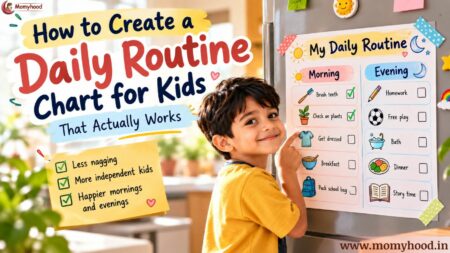
How We Made a Daily Routine Chart for Kids That Aryan Actually Follows

For almost a year, my mornings sounded like a broken record. “Brush your teeth.” “Where’s your uniform.” “Five more minutes, then breakfast.” I was saying the same ten instructions every single day, and Aryan was tuning out every single one. What finally broke that cycle wasn’t stricter rules — it was a simple daily routine …

how to bond with your child

How to Bond With Your Child When They’d Rather Be Outside Playing

A few months ago, I realized I’d started every conversation with Aryan the same way: “Homework done?” “Did you have your bath?” “Is your bag packed for tomorrow?” Logistics. Just logistics. He’d answer in one word and run back outside to his friends, and I’d stand there wondering when exactly we’d stopped actually talking. That’s …

Toddler to Eat More Vegetables

Encouraging Your Toddler to Eat More Vegetables: A Mom’s Guide

Quick answer: Offer vegetables often without pressure – toddlers may need 10–15 tries before accepting a new food. Involve them in cooking, eat veggies yourself, and pair new foods with familiar favourites. Key takeaways Exposure beats pressure Let toddlers cook and serve Pair new with familiar Model eating vegetables yourself Hello dear parents! Being a …

Explaining Periods to Young Children

Explaining Periods to Young Children: How I Talked to My 6-Year-Old Son About Menstruation

Quick answer: Start early with simple, honest words and correct names. Periods can begin as early as 8, so talk before then, keep it matter-of-fact, and include boys in the conversation. Key takeaways Use correct, simple words Talk early – periods can start around 8 Include boys too Prepare a small period kit together Today …

Working From Home with Toddlers

This Is How I Manage My Toddler While Working From Home!

Quick answer: Plan deep work for naps and early mornings, use “busy boxes” and independent play, share shifts with your partner, and be honest with your team about your schedule. Key takeaways Schedule focus work around naps Rotate a few busy boxes Split the day with your partner Lower expectations on hard days Although I …