
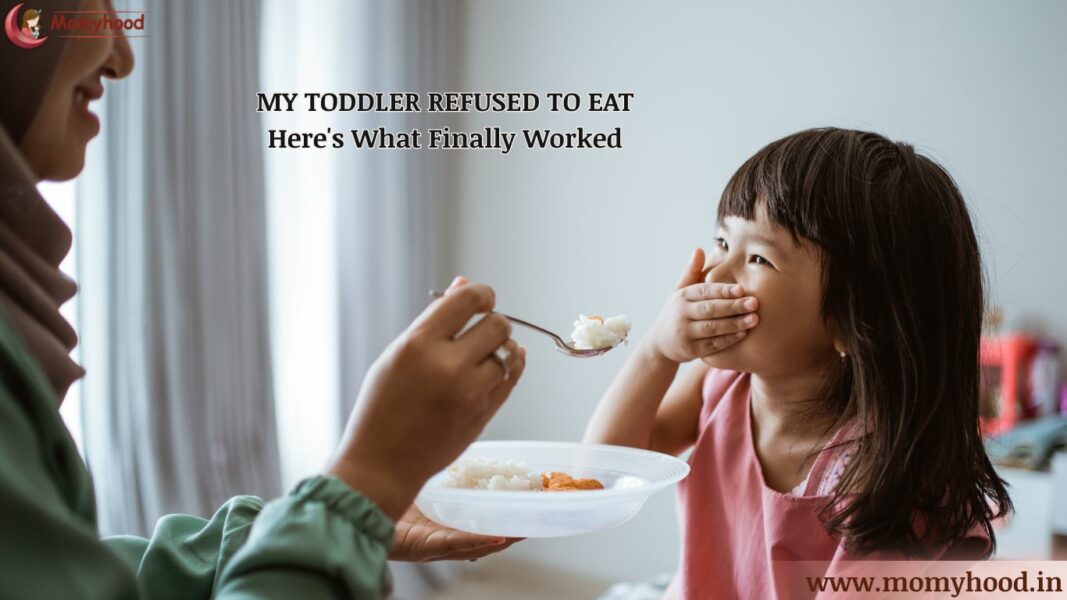
There was a time when I worried about almost every bite my toddler ate. My son was around 22 months old, and apart from breastfeeding, he was hardly eating anything. I tried parathas, curd, milk, flavoured milk, fruits, and almost everything I could think of. What finally helped was not one magic trick, but understanding what interested my child and trying small changes that worked for him.
Key Takeaways
- Toddler eating can change from day to day, so refusing a food today does not always mean refusing it forever.
- Responsive feeding means offering appropriate food without forcing a child to eat and paying attention to hunger and fullness cues.
- Involving toddlers in food preparation can make meals more interesting and give them a sense of participation.
- Eating together can encourage toddlers to learn by watching their parents and other family members.
- Small changes based on your child’s personality can work better than trying every feeding trick at once.
- Breastfeeding can continue alongside complementary foods, including beyond 12 months, while toddlers also need appropriate complementary foods.
- Persistent feeding problems or concerns about growth and nutrition need individual advice from a pediatrician.
What Does “How to Make Toddler Eat Food” Really Mean?
How to make toddler eat food is really about finding ways to encourage a toddler to eat without turning every meal into a struggle. Toddlers are learning about different tastes, textures, hunger, fullness, and independence, so their eating habits can change frequently.
In my case, the problem felt much bigger than simple pickiness.
My son was around 22 months old, and apart from breastfeeding, he was not eating much at all.
Not in the morning.
Not at lunch.
Not at dinner.
📣 Loved what you read? Want to go deeper into conscious parenting? ✨ The Power of Manifestation in Parenting is now available — A soulful guide packed with real-life tools like affirmations, energy shifts, and sleep talk that I personally use with my son, Hitarth. 💛 Start your journey toward calmer, connected parenting today. 🎉 Launch Offer: Only ₹99 (limited-time price!) 📲 Instant download. No waiting. 👉 Grab your copy now!.
He was not even interested in a cup of milk.
I tried giving him parathas, curd, milk, flavoured milk, and different foods I thought he might like.
Almost everything I tried seemed to fail.
I was constantly worried.
Is he getting enough nutrition?
Why is he refusing everything?
What am I supposed to feed him?
I also visited his pediatrician and consulted doctors online. Some suggested reducing breastfeeding, but I was not ready for that, and my son was not ready either. At that point, breastfeeding was the one thing he was willingly taking.
I searched online, asked questions in parenting groups, and tried different suggestions.
The most frustrating part was that many articles seemed to work for everyone else’s child but not mine.
That was when I realised something important:
There may not be one feeding method that works for every toddler.
Related read: How I Used Simple Manifestation Techniques for Picky Eaters to Transform My 2-Year-Old’s Eating Habits
Why Is It Important to Encourage a Toddler to Eat Without Force?
Encouraging a toddler to eat without force can help keep mealtimes calmer and allow the child to respond to their own hunger and fullness cues. The World Health Organization recommends responsive feeding, which involves recognising children’s hunger and fullness signals and encouraging them patiently rather than forcing them to eat.
At that time, I was so worried about my son’s food intake that every meal felt like a test.
If he ate two bites, I wanted him to eat five.
If he refused something, I immediately started thinking about what else I could offer.
If he ate less than another child, I wondered whether something was wrong.
Over time, I started looking at meals differently.
Instead of asking:
“How can I make him eat this?”
I started asking:
“What can I do to make him interested in eating?”
That small change helped me experiment more calmly.
The American Academy of Pediatrics also notes that picky eating is common in toddlers and that a child’s food preferences can change from day to day.
So if your toddler refuses a food today, it does not necessarily mean they will refuse it forever.
Toddler nutrition and healthy eating habits → Toddler Nutrition Guide
What Did I Try to Make My Toddler Eat Food?
The methods that helped my toddler were simple things I tried based on his behaviour, interests, and reactions. I am sharing them as personal experiences because what worked for my child may not work in exactly the same way for yours.
I Turned Milk Into a Small Game
First, I noticed that my son loved copying us.
One day, when I gave him a cup of milk, I also gave one to his dad.
We started touching our cups together and saying “cheers.”
He copied us.
Then he took one sip.
After that, he put the cup down.
So I tried it again.
I changed the cup and asked him to “cheers” again.
He copied us again.
To my surprise, he ended up drinking more than half a cup this way.
The important part was not actually changing the cup. It was that the milk had become part of a playful interaction he enjoyed.
If your toddler loves copying you, try eating together.
If your toddler likes choosing things, offer two suitable options.
If your toddler enjoys playful interaction, make the meal a little more engaging.
You do not have to copy my exact method.
Watch what naturally catches your child’s attention and use that as your starting point.
I Started Involving Him in Cooking
Second, I started taking my son with me when I was preparing food.
Before going into the kitchen, I would say:
“Come, let’s make a pancake.”
Or:
“Come, let’s make chapati.”
Sometimes it was vegetables, milk, or something else we were preparing.
Of course, I made sure that anything hot, sharp, or unsafe was completely away from him.
But I allowed him to participate in simple, age-appropriate ways.
And something interesting happened.
He sometimes started asking for the food before it was even ready.
The American Academy of Pediatrics also suggests involving children in food preparation and giving them opportunities to participate in food choices.
Depending on your child’s age and ability, you might let them:
- Wash fruit with supervision.
- Stir a safe mixture.
- Put soft ingredients into a bowl.
- Help arrange food on a plate.
- Choose between two appropriate foods.
If your toddler loves being your little helper, this is something worth trying.
Sometimes children become more interested in food when they feel involved in making it.
Picky Eater? No Worries!! Here Are Some Suggestions Basis My Experience
I Stopped Making Every Meal About Eating
Third, I realised that I was spending too much time talking about food.
“Just take one bite.”
“Try this.”
“You haven’t eaten anything.”
“Please eat.”
I was worried, so I kept trying to solve the problem while he was sitting at the table.
Eventually, I started stepping back.
I would offer the food and let him decide whether he wanted to eat it.
This approach is closer to responsive feeding, where parents offer food and respond to the child’s hunger and fullness cues instead of forcing them to eat.
For example, if your toddler pushes the food away, you can calmly say:
“Okay, you don’t want it right now.”
You do not have to immediately turn the refusal into another negotiation.
Sometimes reducing the pressure around food can make mealtimes easier for everyone.
Can Eating Together Help a Toddler Eat Food?
Eating together can give toddlers an opportunity to watch how their parents and other family members eat. Children often learn through observation, and family meals can make food feel like a normal part of family life rather than a task they have to complete.
I noticed this with my own son.
He was often curious about what we were eating.
So instead of making every meal completely separate for him, I started involving him more in our family meals.
For example, if we were eating chapati and dal, I could offer him an age-appropriate portion of the same family food.
I would eat my own meal instead of constantly watching his plate.
Sometimes the best encouragement is simply letting your child see you enjoying food.
Should You Use Reverse Psychology to Make a Toddler Eat?
I would not recommend using reverse psychology as a regular feeding method, even though a version of it worked with my toddler at the time.
My sister, who is a doctor, suggested that instead of repeatedly offering him food while we were eating, we should simply focus on our own meals.
So rather than saying:
“Come, have this.”
we would eat our food.
Sometimes, when he saw us eating, he became interested and wanted some too.
Looking back, I think the useful part was less about “tricking” him and more about removing some of the pressure and allowing him to become curious.
That is an important difference.
I would not tell a toddler that food is forbidden simply to make them want it.
Instead, you can say:
“This is what we are eating. You can have some if you want.”
This keeps the child involved without turning food into a power struggle.
Related read: Is Junk Food for Kids Really That Bad? Let’s Talk, Mom to Mom
How Can You Introduce New Foods to a Picky Toddler?
You can introduce new foods by offering small amounts alongside familiar foods and giving your toddler repeated opportunities to see and try them without pressure. Toddlers may need time and repeated exposure before they become comfortable with unfamiliar foods.
I learned this particularly with fruits.
My son’s preferences changed constantly.
First, he liked apples.
Then grapes.
Then bananas.
Then papaya.
Then melon.
And eventually, muskmelon became his favourite.
So I stopped thinking:
“I need to find one fruit that he will always eat.”
Instead, I started rotating different fruits.
For example:
| If your toddler likes | You can also try |
|---|---|
| Banana | Papaya or melon |
| Apple | Pear |
| Chapati | Rice |
| One familiar vegetable | A small amount of another vegetable |
| Curd | Another suitable dairy food |
The goal is not to make your toddler finish the new food.
The goal is to keep offering variety without turning every new food into a battle.
If your toddler refuses something today, you can simply try it again another day.
Healthy foods for picky toddlers → Healthy Toddler Food Guide
What Did My Toddler’s Meal Routine Look Like After Things Improved?
My son’s eating improved gradually, but it was not a sudden transformation where he started eating everything. At that stage, I was simply happy that he had started accepting more food.
This was roughly what his routine looked like:
| Time | What he was eating |
|---|---|
| Breakfast | Two to three bites of paratha or bread |
| Mid-morning | Two large slices of muskmelon |
| Lunch | Some chapati or rice with curd or vegetables |
| Evening | Fruit and a small snack |
| Dinner | Almost a whole chapati with moong dal |
| Breastfeeding | Continued according to his needs |
| Before bed | Mango shake and sometimes mango, followed by milk |
This was my son’s routine at that particular stage, not a meal plan that every toddler should follow.
WHO recommends that children 12–23 months receive complementary foods several times a day while breastfeeding can continue up to 2 years or beyond.
So please do not compare your toddler’s portions with the portions my son was eating.
The useful part of my experience is the process, not the exact amount of food.
Your child’s nutritional needs depend on their age, development, growth, appetite, and overall health.
What If Your Toddler Is Still Not Eating Food?
If your toddler consistently eats very little, the next step may need to be a conversation with your pediatrician rather than another feeding trick.
This is something I would emphasise more strongly today.
When I was worried about my son, I did consult his pediatrician.
That helped because another mother’s experience can give you ideas, but it cannot tell you whether your own child’s growth and nutrition are on track.
Speak to your pediatrician if your toddler:
- Is losing weight or not growing as expected.
- Eats an extremely limited range of foods.
- Frequently coughs or chokes while eating.
- Has difficulty chewing or swallowing.
- Refuses both food and fluids.
- Seems unusually tired or unwell.
- Has another health concern alongside poor eating.
A feeding tip should never replace medical advice when there is a genuine concern about a child’s health or growth.
What Can You Try at Your Next Meal?
The best way to start is to choose one small change based on your toddler’s personality instead of trying every feeding method at once.
Ask yourself:
What does my child naturally respond to?
If your toddler loves copying you, eat together.
If your toddler loves helping, involve them in safe food preparation.
If your toddler becomes upset when you pressure them, reduce the talking around food.
If your toddler accepts only a few foods, keep one familiar food on the plate while offering something else in a small amount.
If your toddler loves making choices, try:
“Would you like banana or melon?”
Then watch what happens.
Did your child become curious?
Did they touch the food?
Did they smell it?
Did they take one bite?
Did they simply leave it there?
These little observations can help you understand what works for your child.
You do not need to find the perfect method today.
Try one thing.
Give it some time.
Watch your child.
Then adjust.
That is the approach that helped me much more than constantly searching for another “trick.”
Also read: Mastering Mealtime with Your Picky Eaters: A Personalized Guide to Success
Conclusion
Learning how to make toddler eat food is not about finding one perfect trick; it is about understanding your child and making mealtimes calmer, more positive, and less pressured.
When I think back to those days, I remember how worried I was.
I thought every meal had to be successful.
If my son ate only a few bites, I felt anxious.
If he refused something, I immediately started thinking about what else I could give him.
But slowly, I learned to look at progress differently.
He was trying something new.
He was becoming interested in food.
He was joining me in the kitchen.
He was sometimes eating foods he had previously refused.
That was progress.
So if your toddler is refusing food right now, remember that what worked for my son may not work for yours.
Your child may respond to something completely different.
And that is okay.
Watch your child. Notice what they respond to. Try one small change at a time.
If you are genuinely worried about your child’s growth, weight, nutrition, or ability to eat safely, speak with your pediatrician rather than relying only on online tips.
Because the goal is not simply to make your toddler finish a plate.
The goal is to help your child gradually develop a healthy and comfortable relationship with food.
Your comments and shares do more than just support our blog—they uplift the amazing moms who share their stories here. Please scroll down to the end of the page to leave your thoughts, and use the buttons just below this line to share. Your support makes a big difference!